Teams changing their workflows
Moving real work onto AI models and agents, and needing to know what holds up as models change.
Many teams already pay for an AI assistant and use it as they go. Few know which of their work it handles well, where it quietly gets things wrong, or whether a different model, tool or setup would do better.
You don’t need to know what to ask, and you don’t need an AI team. Start by telling us how your team works today. We work out with you what is worth testing, then measure it on your real work.
Moving real work onto AI models and agents, and needing to know what holds up as models change.
Serving open-weight models on your own GPUs. We measure which model, serving engine and settings deliver the answers, speed and cost you need on your hardware.
One agreement covering work across your portfolio companies.
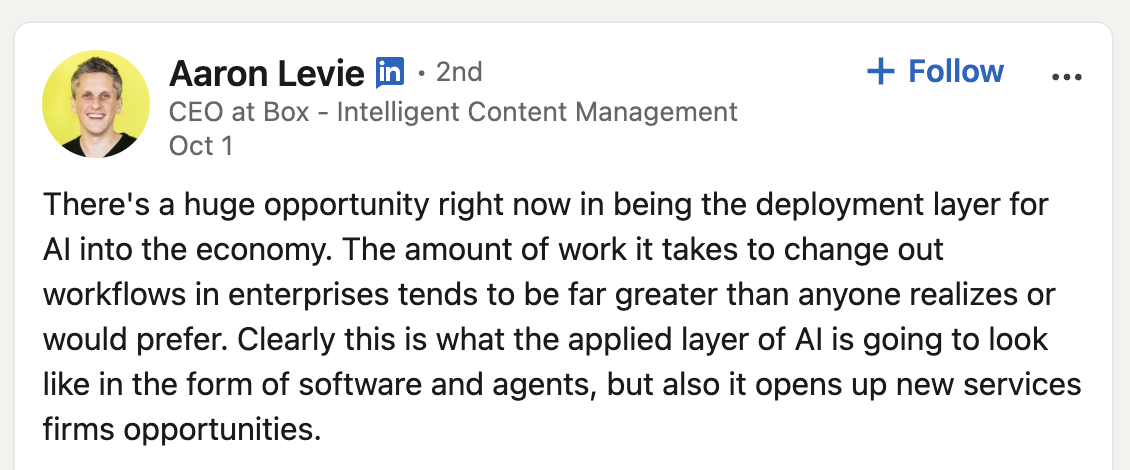
Box CEO Aaron Levie put it plainly: changing workflows for AI takes far more work than anyone expects. Workflows need re-engineering for agents, evaluations need to be built and maintained, and the whole system needs updating every time a new model arrives.
If your organization is in the middle of that change, talk to us. Measuring what works, and checking it still works after every model update, is what RadianVector tools are built for.
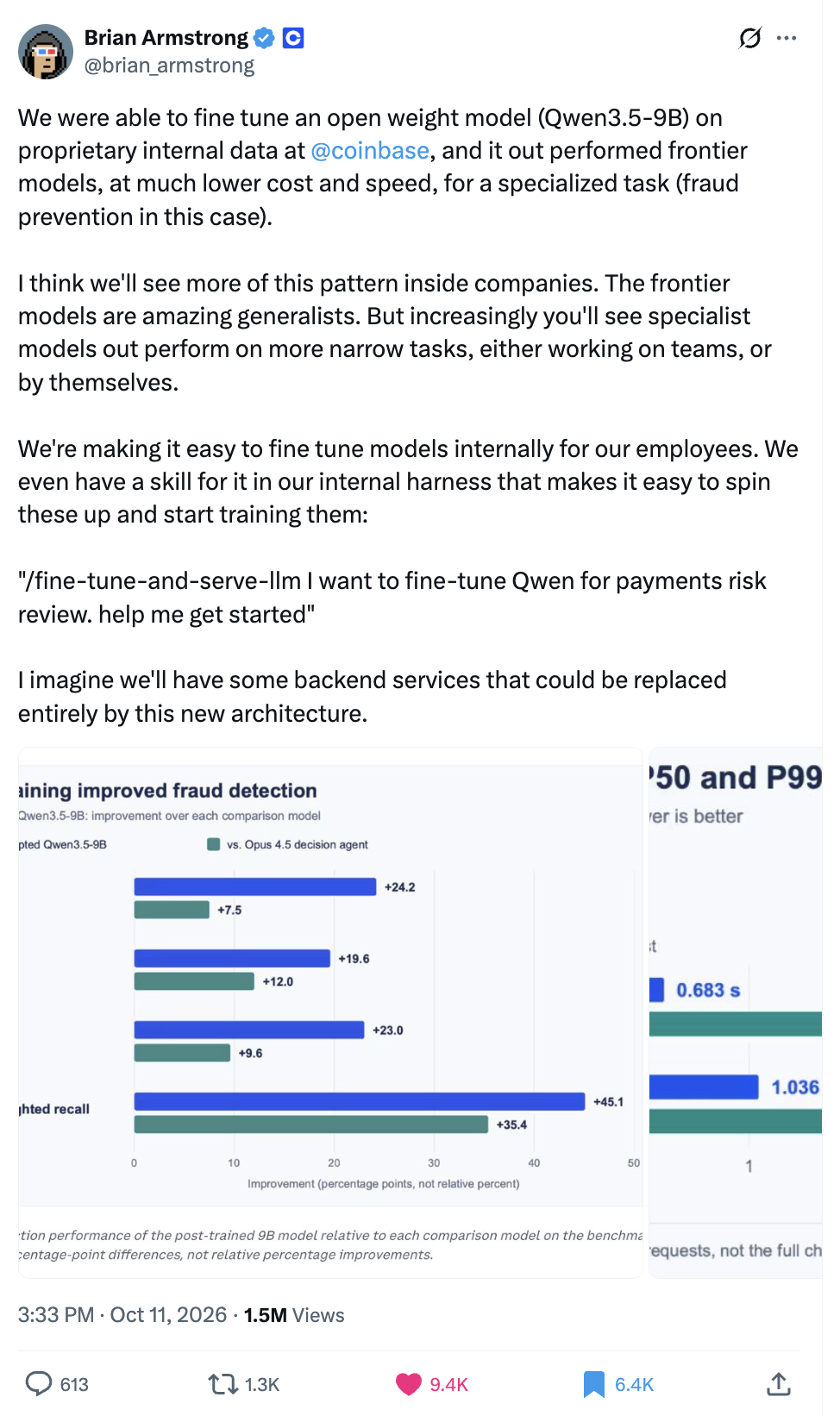
Coinbase fine-tuned Qwen3.5-9B, an open-weight model, on its own data. For fraud prevention it outperformed frontier models at much lower cost.
Running your own model is where RadianVector tools go furthest. A hosted API exposes a few settings; your own stack exposes every one of them. We measure which combination delivers the answers, speed and cost you need, on your hardware and your workload.
Tell us about your organization and how you use AI today. We’ll suggest what is worth looking at first.
Reach out and send us a note. We’ll take it forward from there.